- 2026 (9)
- 2024 (2)
- 2023 (3)
- 2022 (1)
- 2021 (2)
- 2020 (10)
- 2019 (4)
- 2018 (6)
- 2017 (22)
- 2016 (18)
- 2015 (22)
- 2014 (52)
- 2013 (80)
- 2012 (36)
- 2011 (204)
- 2010 (79)
- 2009 (18)
- 2008 (97)
- 2007 (158)
- 2002 (1)
-
parting lines compilation
This ship has sailed. Forget about us, you need to fix yourself! We can’t go on like this. I know that you don’t love me anymore. I take back everything I said, please delete my emails (Facebook message). This is just no fun. I’ve got therapy but there’s no cure for being a deadset arsehole.…
Written by
-
for a good time…
Email me cause I gots no phone. I done left it somewhere again and forgot. They needs to make a Smart phone for the stupidest people. This is discriminations.
Written by

-
Career Inventory Results
100 Social Sciences Preschool & Elementary Teaching 095 Arts and Humanities Decorating & Display Work 094 Social Sciences P.E. & Recreation Instruction 094 Arts and Humanities Commercial & Fine Arts 093 Social Sciences Counseling & Social Work 093 Social Sciences H.S., College & University Teaching 093 Business Promotion & Public Relations 092 Social Sciences Search…
Written by
-
retrogasm: Wow the really do make a box of chocolates big enough to say “I’m sorry I called you a cunt”…
Written by

-
Guilty as Charged
I’ve been told I’m deficient in a lot of areas (conscientiousness, attention-span, cardiovascular fitness, height- just to name a few) and I’ve been labelled some pretty unglamourous titles (Westie, alliterate [sic], ‘Asian driver’ [?!]) but the other night I received my most esoteric insult yet. I was accused, in a most disparaging tone, that I…
Written by

-
-
-
-
-
-
-
T & P
Black Dog Institute Temperament and Personality questionnaire What is the Temperament and Personality questionnaire? The Temperament and Personality (T & P) Questionnaire is a 109-item questionnaire designed to give people feedback on their personality style. The personality styles included in the T & P Questionnaire are those that are considered to either predispose people to…
Written by
-
free the FU
Ai WeiWei released! Hurrah! Today I will wear P’s Zhong Nan Hai T-Shirt to celebrate. LIBERATING ART – 1: POLITICAL OPPRESSION – 0
Written by

-
Effing Cheffing
Today I was starving and decided to (gasp!) cook dinner. It’s a tough call for someone who is living with a gourmand and Breatharian (this is the same person, by the way). Not wanting to blow my own trumpet too much, I do hate to say it but despite the real (and metaphysical) challenges of…
Written by
-
-
-
-
-
-
-
chindogu
It’s a wondrous age. I count my blessings to be living in a time of power-steering, major advances in psychiatry and neuroscience, zero-calorie soft drink and the imminent life-changing promise of cloud-computing. (Although I would be happy to give that all up to be jetting about in a Vespa, my hair pinned up in a perfectly stiff…
Written by
-
-
The Chocolate Teapot
… of no use at all, expcept perhaps the demonstration of functional failure. What a great website! I’ve found my vocational calling at last. A lifelong research project into defeat and related topics. The Chocolate Teapot
Written by
-
breaking fast with fats
πρωινό Chocolate cannoli for breakfast – the Hellenic bakery will be the death of me.
Written by
-
bad-postcards: EXCUSES, EXCUSES! Busy Person’s Correspondence. Do you have anything for the OTHER REASONS section?
Written by
-
testing… testing… 1… 2… 3… test theories
Measurement Theories Classical Test Theory (CTT) True score theory. Item Response Theory (IRT) May be known as modern latent trait theory. Rasch model The development of the Rasch model, and the broader class of models to which it belongs, was explicitly founded on requirements of measurement in the physical sciences. Psychometricians have also developed methods for working with…
Written by
-
la plus jolie piece
Cerebellar Purjinke, this will be the name of my first daughter.
Written by

-
15-item Questionnaire
Part A: Test Development Hints for scale development You are developing a scale to measure a construct not just a survey of disparate questions. This means that you will have to design your items in such a way as to mean something when scored. The most common approach is to ask 15 questions that measure…
Written by
-
Personality
An individual’s typical and consistent motivations help shape that individual’s personality Characteristic motivation itself may be considered an aspect of personality and characteristic motivation may also result in certain consistent behaviour patterns
Written by
-
Learned Helplessness
Learned Helplessness the expectation that no matter what behaviour is shown, it will either not result in a desired outcome or will not allow escape or avoidance of an undesired outcome. In other words, an individual believes that events and outcomes in the world are uncontrollable. The individual perceives a behaviour-coutcome noncontingency, this is opposite …
Written by
-
Self-Regulation
Proposed by Bandura Setting goals and standards for self Observing or monitoring (keeping track of) our own behaviour to see how well we meet these standards. Rewarding or punishing self according to how well we meet our own standards (our individual goals and standards determine how we self-reinforce and regulate our behaviour) We have individual…
Written by
-
Reinforcers & Punishers
External and internal motivation conceptualised in terms of reinforcers and punishers Reinforcement increases the likelihood of a behaviour occurring in the future Punishment decreases the likelihood of a behaviour occurring in the future External reinforcers and punishers are ones that come from the outside world. Internal reinforcers and punishers are internal consequences created by our…
Written by
-
Emotional Intelligence
Emotional intelligence describes emotional abilities or competencies that group together and that involve drawing on emotion in adaptive ways. Emotional intelligence includes adaptive perception, understanding, utilisation and management of emotion in the self and others. In some conceptualisations of emotional intelligence abilities that build on these competencies are included; such additional qualities include empathy,…
Written by
-
Happiness
Approximately 50% of happiness seems to be determined by a happiness ‘set point.’ When poeple experience a lasting negative event (e.g., become paralysed) they become less happy, but after a year or so most people return to their baseline level of happiness. The reverse is true is true when people experience a positive event (e.g.,…
Written by
-
Regulation of Emotion
A process model of emotion regulation was developed by Gross and John and described in a 2003 article in the Journal of Personality and Social Psychology. According to this model, emotion may be regulated at five stages in the emotion generative process: selection of situations, modification of situations, focus of attention, change in cognition changes in…
Written by
-
Freudian Psychoanalytic Perspective
Implicit processes Psychodynamic conceptualisations of the unconscious – id, ego, and superego Part of the ‘Id’ is strong instinctive life oriented (EROS – need for food, sex) and death oriented (THANATOS – aggression) motivation. Dynamic interactions between id, ego, and superego give rise to unconscious motivation that manifests itself in various ways. For example, instincts…
Written by

-
Reflection Question 5 – Social Cognitive Theory
5. Professor Albert Bandura talks about some concepts from Social Cognitive Theory What are some ways that come to your mind of how concepts from Social Cognitive Theory can be used to improve societies?
Written by
-
Social Learning Theory
Social Cognitive Learning Theory View of Motivation Social Cognitive Learning Theory is one of the best-articulated and researched theories that explains motivation and builds on theory and research focusing on cognitive processes and learning. Observational learning The basic premise of observational learning is that our potential for behaviour may change as the result of observing…
Written by
-
Self-Efficacy
Self-Efficacy The belief that we are capable of successfully showing certain behaviours that will bring about desired outcomes High self-efficacy tends to motivate people to engage in a realm People experience self-efficacy for specific realms of behaviour and may also have high general self-efficacy. Our choice of activities is partially determined by self-efficacy. We show more effort…
Written by
-
Outcome Expectancy
The interaction between an individual’s outcome expectancy and the value of an outcome determines how motivating this outcome is.
Written by

-
Goals & Plans
Goals Goal Dimensions Commitment: willingness and persistence in working towards achieving a goal; the more commitment, the more energy and time a person expends in working towards the goal Specificity: more precise goals (e.g. those that have concrete behaviours and anticipated outcomes associated with them) are more likely to lead to behaviours associated with reaching…
Written by

-
Approach and Avoidance
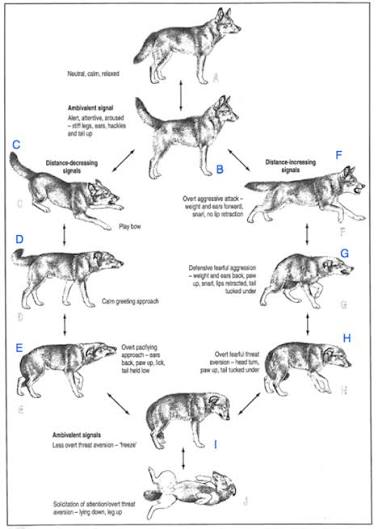
Complexities of motivation in real life: The role of situations Many real-life situations that we encounter or contemplate entering have the capacity to meet multiple needs. Complexities of motivation in real life: Approach-Avoidance Conflicts and other Conflicts (Miller) Many real-life situations that we encounter or contemplate entering have the capacity to block multiple needs. If…
Written by
-
Socially Acquired Needs
Socially acquired needs build on our basic organismic needs, but the level of and expression of these socially acquired needs are shaped by our learning experiences and our culture. Such needs include need for achievement, need to affiliate and need for power. Specific cues and situations in our environment may prompt a need and prompt…
Written by
-
Flow
complete absorption in an activity, occurs when there is a good match between our abilities and the level of challenge or difficulty of a task may be related to competence, self-determination and self-actualisation needs has been found to be associated with optimal performance tends to be a desirable and motivating state
Written by
-
Psychological Needs
Psychological needs may be inborn or learned, or a mixture of nature and nurture motivate our behaviour influence the goals we set ourselves influence what we find reinforcing Inborn Psychological needs Autonomy and Self-Determination: need to experience choice in initiation and regulation of own behaviour Competence: need to be effective in interaction with the environment Relatedness: …
Written by
-
Sexual Motivation
Sexual motivation in humans has a biological basis, but also strong learned and cognitive components. Stimuli in the environment (e.g. a sexual partner) as well as biological underpinnings (e.g. hormones) prompt sexual motivation. Cognitive factors tend to be important mediators between sexual motivation and sexual behaviour. Sexual Scripts: Cognitive representations of behaviour sequences shown partners…
Written by
-
Physiological Needs
Physiological needs are at least in part biologically based and inborn. Meeting physiological needs helps us survive. Satisfaction of physiological needs is related to primary reinforcement. Hunger & Thirst – Homeostatic Model An individual’s body tries to maintain equilibrium in food and fluid intake and expenditure. A physiological need arises when an individual has been…
Written by
-
Behavioural Expressions of Motivation
Motivation is an internal process that gives direction to our lives. Motivation can be described as a desire to show behaviour. An internal process that gives direction to our lives. A desire to show a behaviour or a condition that elicits behaviour. Motivation comes from internal factors and external prompting conditions that interact with internal…
Written by
-
Biological Perspective of Emotions
Autonomic nervous system Fight-or-Flight Heart, lungs and muscles Endocrine system Glands and hormones Neural brain circuits Limbic brain structures, e.g. amygdala Rate of neural firing Neural activity Rate of neural firing (information processing) Facial feedback Discrete patterns of facial musculature JAMES-LANGE THEORY
Written by
-
The Positive and Negative Affect Scale (Watson & Clark, 1997)
1 cheerful 4 sad 3 active 5 angry at self 4 disgusted 2 calm 4 guilty 3 enthusiastic 2 attentive 4 afraid 1 joyful 5 downhearted 3 bashful 5 tired 4 nervous 3 sheepish 4 sluggish 3 amazed 3 lonely 4 distressed 2 daring 4 shaky 4 sleepy 4 blameworthy 3 surprised 2 happy…
Written by
-
EMOTION
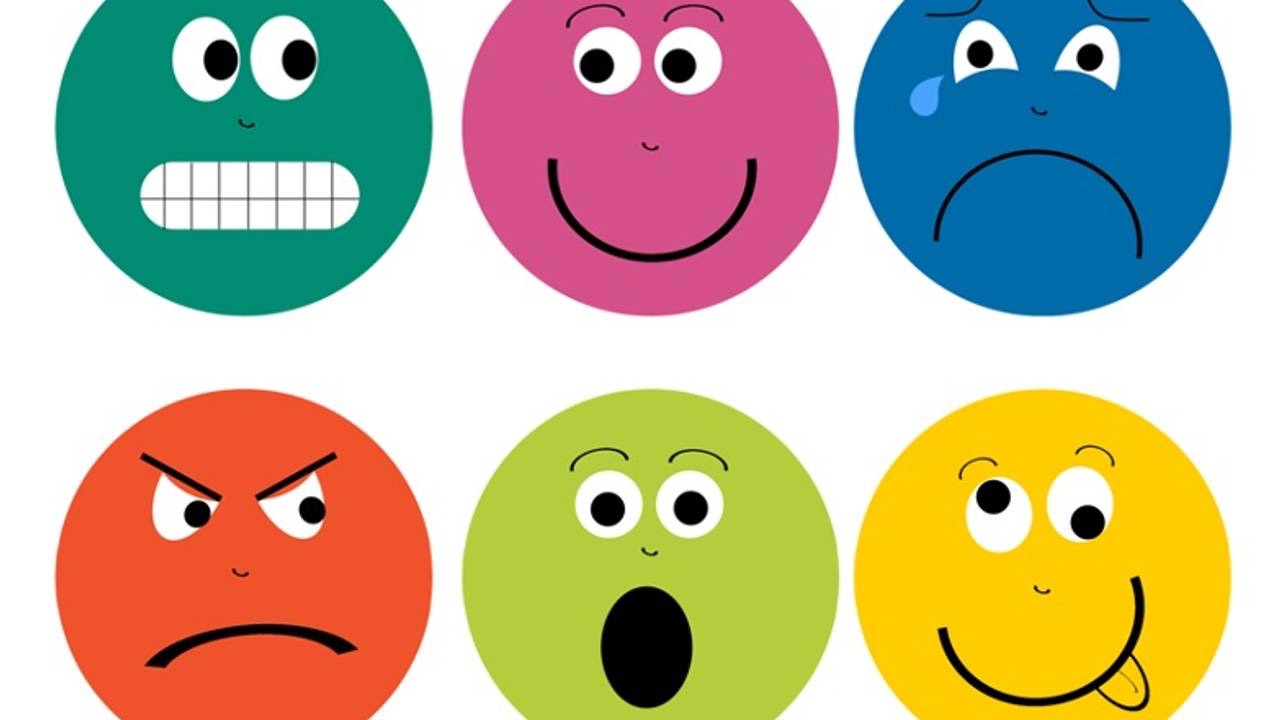
biological subjective functional social changes in physiological level of arousal activation bodily preparation for action motor responses feelings (pleasant or unpleasant) phenomenological awareness cognition contributing to motivation and decision making goal directed motivational state communication of an internal state facial & vocal expression
Written by
-
Personal Growth
Growth motivation The desire to develop in ways that allow us to fulfil our potential. Agency is a critical factor. Can only develop once basic/deficiency needs are satisfied. Requires a match between abilities and the challenges presented by the environment, (e.g. state of flow). More likely to develop if the belief that one has the…
Written by
-
The Self
Concept Identity Agency The cognitive (general) representation of oneself.Includes an integrated collection of (specific) self-schemas, or abstract representations of one’s features thatrelate to certain realms of life. e.g. relationships, work, physical self etc.One is motivated to behave consistently to one’s self-schema. Ideal-self schemas. A description of oneself in relationship to the society and includes social…
Written by

-
Values & Motivation
The perceived value of an outcome or object influences motivation. Value determines how reinforcing or desirable the outcome or object is. Influenced by cultural and social norms. FORCE the wish to approach or avoid (motivational pull or push associated with) an outcome determined by the interaction of the value of the outcome in interaction with…
Written by
-
Learned Helplessness
learned helplessness is a pessimistic explanatory style (attributional learning perspective: no control over bad outcomes) prevents the person from showing behaviours that may lead to good outcomes. Attributional Retraining provides information to help individuals investigate whether their explanatory styles are adaptive, through behaviour modification helping individuals examine whether negative aspects of their environment could be…
Written by
-
Mastery Beliefs
WAYS OF COPING BEHAVIOUR (action taken) Approach versus Avoidance Move towards and interact with the problem versus walking away. Social versus Solitary Working with others. Proactive versus Reactive Prevent a problem before it occurs. Direct versus Indirect Taking action oneself rather than enlisting someone else. Control versus Escape Take charge versus steering clear. Alloplastic versus…
Written by
-
Attributions
Attributions may influence outcome expectancies. Outcome expectancies are influenced by our perception of the contingency between behaviours and outcomes or consequences. (Social Cognitive Learning Theory) Attributions are the explanation we give to a past outcome we have experienced. Personal Permanent Pervasive Where the cause of an event arises. People experiencing events may see themselves as…
Written by
-
Its time to…. CHANGE YOURSELF (sic)
2-WEEKS FREE TRIAL This was the message from a local Dojo flyer I read outside a nondescript Japanese/Korean BBQ restaurant last night while contemplating their menu which featured a tantalising array of farm animal anatomy (tender beef liver sashimi, pork intestine soup, beef recticulum (?) special, sheep innards etc.). Karate promises to transform. It was very…
Written by

-
-
-
-
smell the difference
You know what the difference between a cheap perm and a normal perm is? It’s the smell. You pay the $220 so your hair doesn’t smell like carpet. Feedback on my new hairstyle. Well so much for that! My first and last foray into chemical curls.
Written by
-
Antidepressants
Psychologist Says Antidepressants Are Just Fancy Placebos Irving Kirsh aims to “explode the myth” of Prozac and its ilk, arguing that there’s little evidence that they actually work for most patients, by Carlin Flora; photograph by Jared Leeds From Discover Magazine Brain special issue; published online June 9, 2010. Why is that some people respond very well to…
Written by
-
-
it’s a moving sale!
I’ve finally begun the task of consolidating my blogs over to one site. I’m going with WordPress again because it’s really easy and neat although I was tempted by the connectivity, syndication bang of Blogger. We’ll see if it sticks….
Written by
-
-
another work in progress
I’m slowly, slowly moving my art portfolio from an old website to this WordPress. An easier CMS might mean I update it from time to time!
Written by
-
goodness ghee
Last night we had Bone Curry and Onion Tikka Marsala from Blu Ginger on Blues Point Road. The first dish featured a dark, mild curry sauce flecked with shards of goat bones and gristle and the second dish consisted of chewy, chicken pieces sparsely distributed amongst a generous serving of coarsely chopped, slightly raw onion. The main constituent was ghee. We…
Written by
-
life a user’s manual
observatorios: la vida, instrucciones de uso el esquema de la novela I love this map.
Written by
-
thinking makes it
Why then ‘tis none to you; for there is nothing either good or bad, but thinking makes it so. Hamlet Act 2, scene 2, 239–25, good ol’ Shakespeare on an Appraisal Theory of Emotions
Written by
-
-
SSS
SSS Directions: Each of the items below contains two choices, A and B. Please circle the letter of the choice, which most describes your likes or the way you feel. In some cases you may find items in which both choices describe your likes or feelings. Please choose the one which better describes your likes or feelings. In some…
Written by
-
DASS-42
DASS Please read each statement and circle a number 0, 1, 2 or 3 which indicates how much the statement applied to you over the past week. There are no right or wrong answers. Do not spend too much time on any statement. The rating scale is as follows: 0 Did not apply to me at all …
Written by

-
Boredom Proneness Scale (BPS)
Are You Easily Bored? The Boredom Propensity Scale (BPS), developed by psychologists Norman D. Sundberg of the University of Oregon and Richard F. Farmer of the Oregon Research Institute, measures your propensity to become bored. Your propensity to become bored is closely related to your propensity to become depressed and pursue thrill-seeking behaviors, and you…
Written by
-
beh-modificat-ing
I must not short-circuit this reinforcement contingency. I must not short-circuit this reinforcement contingency. I must not short-circuit this reinforcement contingency. I must not short-circuit this reinforcement contingency. I must not short-circuit this reinforcement contingency. etc. Your truly.
Written by
-
-
-
nuts
Someone left a beautiful leafy salad with a pomengranate dressing in the kitchen for everyone to eat. However, today’s choc-o’clock (traditionally 3 pm) has been brought forward by two and a half hours and celebrated with milk chocolate and peanuts. And lots of it. Peanut slab, a Boost bar and a coke. That should tide me over until the real…
Written by
-
mi cancion
Me gusta tocar la guitarraMe gusta cantar el solMariachi me acompanaQuando canto mi cancion Me gusta tomar mis copasAguardiente es lo mejorTambien el tequilla blancoCon su sal le da sabor Ay, ay, ay, ayAy, ay mi amorAy mi morena,De mi corazon
Written by
-
ultimomento
If it weren’t for the last minute, I wouldn’t get anything done.
Written by
-
-
Vice Wine Bar in Balmain
Appears to be one hour away from Marrickville which is one hour too long to wait for a glass of wine after work on Friday. Anything en route? Bloodwood? Something in Leichhardt? Have I got a drinking problem?
Written by
-
This pic reminded me of the “Newtown-Bike-Seat-Sniffer” – the urban legend that was circulating around a decade ago when I was residing in a filthy John-Brimingham-esque sharehouse on Lennox street which doubled as a cautionary tale for those who left their quick-release seats unattended on the street. I’m sure it was utterly bogus. But it is akin…
Written by
-
-
-
-
fibre bombing
I just ate a whole box of these Vita Brits High Fibre Bites in the space of 12 hours. I found them on special at Banana Jo’s when I was looking for fruit. I figured I needed to redress the holiday refined-carbs-saturated-fat*-excess with some processed-wholewheat-no-fat-lots-of-refined-sugar-complex-carbs. If that’s not a scientific approach to staying regular, I don’t know what…
Written by
-
early to bed early to rise (chat me anytime)
06:58 J: Secczsfxzsdcddszzcczx :-/ that was my handbag 5:56 me: You have a manbag? 19:38 J: My pocket me: Manbagger J: You were up at 556? What for? me: I up at 5am every morning 19:58 J: I wish I was an early riser. If only I had something to get up for 20:07 me:…
Written by
-
-
-
Ripert a Ripper
10pm Dinner at Le Bernadin. Tasty and tasteful. We had Brice Champagne. An Gewurts with the oyster amuse-bouche. I had the tuna and foie gras, (divine!) escolar (light and subtle, slightly underwhelming after the tuna) and lobster (sweet, chewy texture). (thus fulfilling my fantasy of New York Lobster, although I still have to find a…
Written by
-
flow maps
sunfoundation: Argh… Big city envy. Graphic map envy. Sustainable city transport envy… Source: maproomblog.com
Written by
-
-
peliculiar
Manhattan (Annie Hall et. al. of Woody Allen) Breakfast at Tiffany’s Taxi Driver 25th hour (Son of Sam et. al. Spike Lee* joints ) Dog Day Afternoon (Pierre Huyghe version too) I Shot Andy Warhol Basquiat The Apartment (and Wilder’s Seven-Year Itch which doesn’t get much of a scratch) The Muppets Take Manhattan and the…
Written by
-
moving through traffic
vlad003: Taxicab confessions by IrenaS on Flickr. Oh, and one more thing that NYCecelia does is – takes cabs! Me!? In a cab! Which are all outfitted with GPS maps and 24-hour news channels. I really like this photo. We made the mistake of taking 79th in a rush across town. Tramping through the mud…
Written by
-
jams
sightsounds: NY in the 80s 96 (by stevensiegel260) Source: Flickr / stevensiegel
Written by
-
My New York alter-ego is mouthy with wait staff, shop assistants and ticket attendants (ditto Museum security guards) drinks an inordinate amount of godawful coffee chooses cocktails over wine* has heartburn whining all the time cheap* with tips (in comparison to ‘never-tips’ in Sydney) remains slim despite eating garbage-can-loads of fast food (the folks here…
Written by
-
Pouring rain and wanting a hot dog.
We are going to Gordon Ramsay’s for dinner tonight but all I want is a goddamn hot dog. Every time I pass a hot dog stand they look so gross and dodgy but, my god, it’s like the ubiquitous golden arches. Seeing them on every 3rd street corner is starting to play on my mind.…
Written by